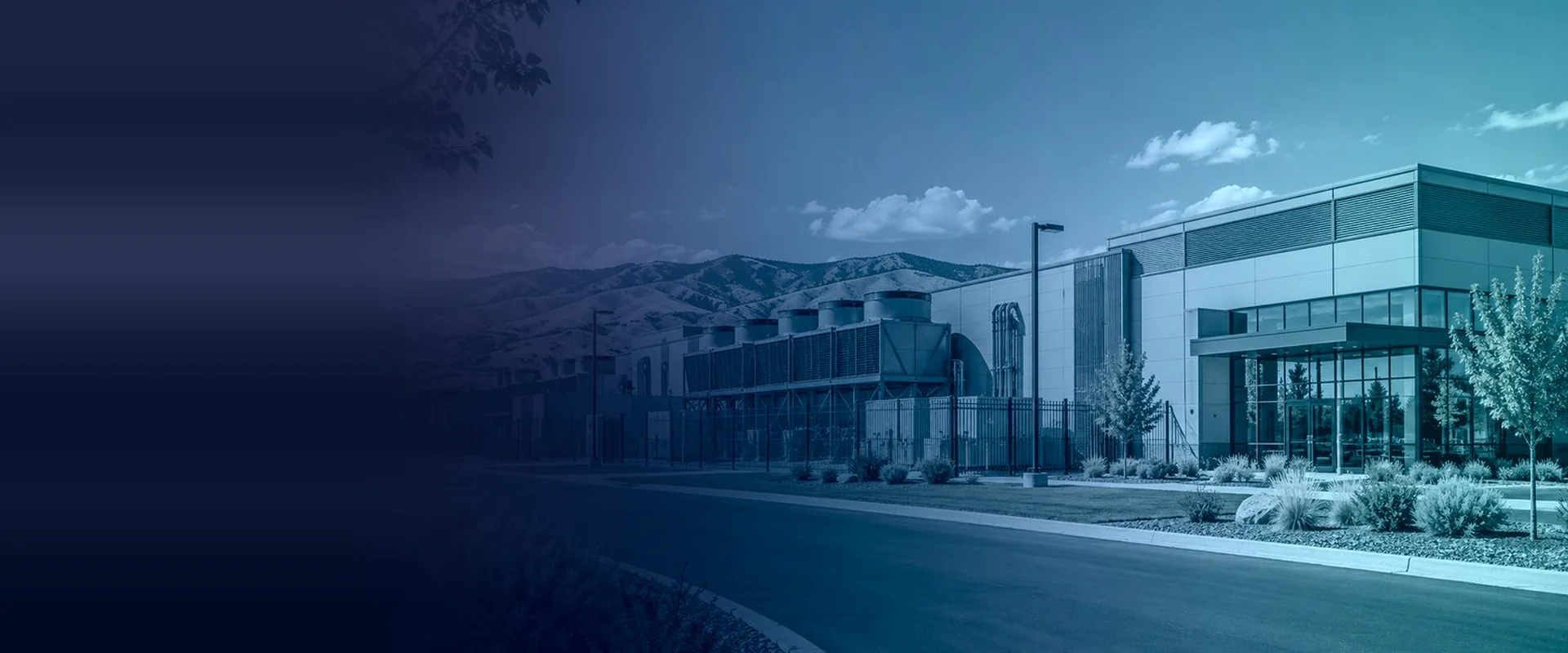
A proposed data center complex with its own power plant on public land in southern Ada County is the largest of several requests now pressing on Idaho Power's system. The utility says the Rhea project is not yet in its forecast because it remains preliminary, and any project of that size would need review by the Idaho Public Utilities Commission, East Idaho News reported.
The load is coming from several directions at once
The Rhea campus is not the only big request Idaho Power has received. Gemstone Technology Park, a 620-acre data center project in Kuna, is expected to need 600 to 800 megawatts, equal to about 20 percent of Idaho Power's current generation capacity. Meta is building a facility on 485 acres in the same area, and Micron's two semiconductor plants are expected to need up to 1,000 MW, according to an op-ed by an Idaho farmer on Yahoo News. The writer says those three projects combined would require between one-half and two-thirds of the utility's existing generation capacity.
Pocatello is testing the same question from another direction. The Pocatello City Council will review an appeal of a denied $2.6 billion data center proposal amid concerns over energy and water use, Idaho Business Review reports. Meta's Kuna site has its own supply story: the company's 200-megawatt Pleasant Valley Solar project, developed by rPlus Energies, will feed the same grid that serves the Kuna data center, PV Tech reports.
Idaho Power is planning for growth it has not yet seen
Idaho Power's 2025 Integrated Resource Plan expects demand for electricity to grow significantly over the 20-year planning period.
Spokesperson Sven Berg told East Idaho News that any project of Rhea's size would need review by the Idaho Public Utilities Commission and planning to avoid "shifting costs to our existing customers."
Who pays is decided in the cost allocation
A large customer's costs fall into three groups, according to Jeff Pierson of Issues and Advocacy Training: dedicated facilities such as a substation serving one campus, shared transmission upgrades, and generation or power supply. Dedicated facilities are usually paid by the customer. Shared transmission is split among customer classes. Generation is the hardest to keep separate.
Idaho Power's own filing brings that fight before the commission now. Case IPC-E-26-07, filed March 31, 2026, asks regulators to evaluate the utility's class cost-of-service method and decide how costs should be assigned to new large-load customers. Intervenors include the Idaho Irrigation Pumpers Association, Micron and the City of Boise, per Idaho Business Review. Under the schedule the commission set, public comment is due December 14, 2026, and a technical hearing begins January 19, 2027.
Farmers are seeing the bill
Irrigators are the clearest example of a customer paying the side effects of the growth. In his Yahoo News op-ed, Adam Young, a third-generation Bingham County grower, writes that since 2021 Idaho Power has raised energy rates for irrigators by 17 percent and demand charges by 138 percent. His family's bill this year is 45 percent higher than in 2021, an increase of about $73,000 on 2,600 irrigated acres. Young says Idaho Power attributes the main driver to increased demand and the generation and transmission investment it requires.
The demand charge is the part most business owners have not seen before. Each month from June through September, irrigators pay based on their highest usage at any point in the month. Young's example: a 150-horsepower pump drew a $777 demand charge in 2021, against a projected $1,840 a month in 2026.
The counterargument
Not every study reads the data the same way. An EPRI analysis, Have Data Centers Raised Your Electric Bill?, found that data center growth caused average residential retail prices to fall modestly rather than rise between 2015 and 2024. Its authors estimate a doubling of data center capacity lowered residential prices by roughly 3.5 percent for a fixed level of demand. The same paper cautions that its findings depend on the grid adding capacity affordably and may not extrapolate to larger, AI-driven facilities.
That caveat is what Idaho is arguing about. The Idaho filings describe a utility that must add capacity for loads it has not yet built, and the commission's large-load case is where the cost of that capacity gets assigned.
Regulators, Pocatello and rate cases decide what comes next
Three events will test the next phase. The commission's schedule in IPC-E-26-07 runs through the December comment deadline and the January hearing. The Pocatello appeal will decide whether that city's denied $2.6 billion data center proposal moves forward. The federal environmental review of the public-land project will add the third.